Short version: playing proxies in casual games is normal, common, and fine. The thing that actually gets people in trouble is a counterfeit — a card made to pass as the real one. Those are two different objects, and the whole way we run this shop is built on keeping them different. Here's where the line sits, as plainly as we can put it.
Casual play: your table decides
Kitchen-table Commander, cubes, a Tuesday night pod — proxies have always been part of that world. Testing a deck before you buy the expensive pieces, running a Reserved List card you will never own, keeping a $400 staple out of a travel deck: these are the reasons people print. Wizards of the Coast has said for years that playtest cards in casual games among friends are fine; what they object to is cards designed to be mistaken for genuine product.
The only rule that matters at a casual table is the one your playgroup sets, so ask. Many pods cap how many proxies a deck can run or ask that they're obvious at a glance. Be upfront and nobody minds.
Sanctioned events: no
Proxies aren't legal in sanctioned tournaments. The only exception is a proxy a judge issues at the event for a card that was damaged during play — and that's the judge's proxy, not yours. Our cards are not tournament legal, and we say so on every page because we mean it. Store events vary: some casual Commander nights allow proxies, some don't. Ask the store before you show up with a foil-proxied Mana Crypt.
The line: playtest card vs. counterfeit
A proxy becomes a counterfeit when it's made to pass as the real card — most of all by copying the official card back and the publisher's branding so it can be shuffled into a real deck undetected, or sold to someone as genuine. That moves it from "playtest card" into trademark and counterfeiting territory, and no price is worth that.
The one hard rule here: we never print the official Magic card back. Not as an uploaded image, not inside a deck file. If an order asks for it, we cancel the order and refund it in full instead of printing it.
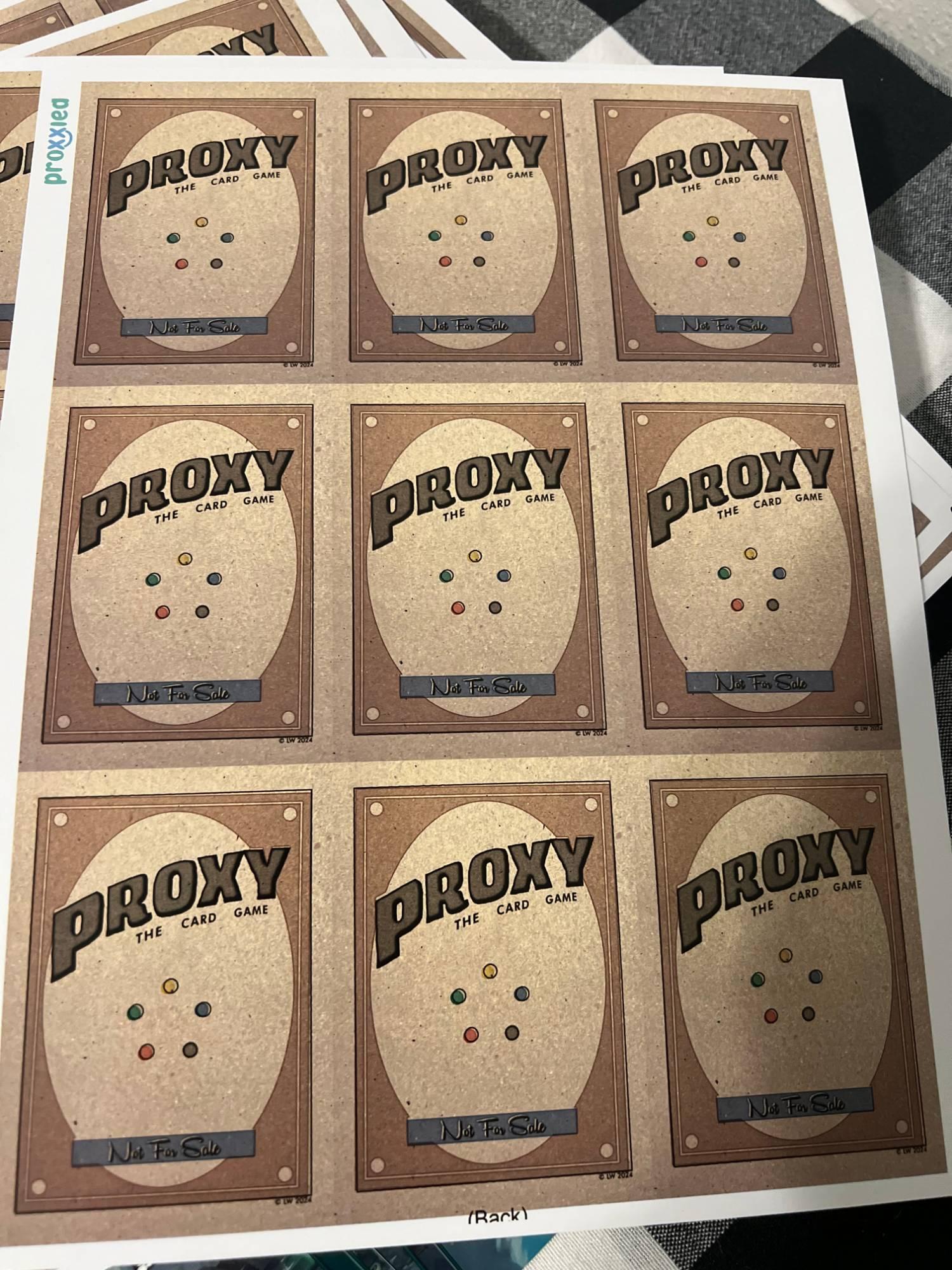
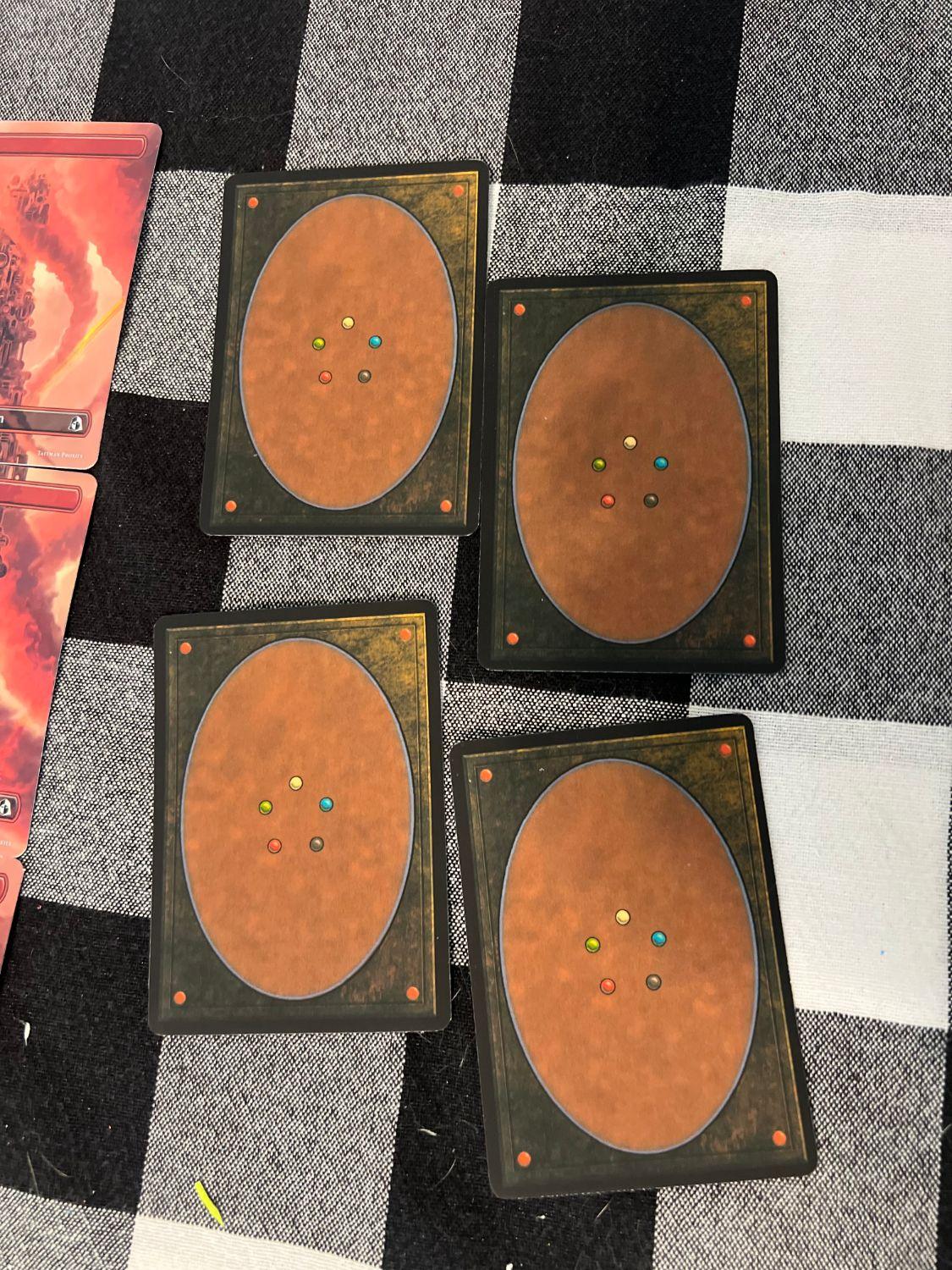
Choose a blank back, our printed back, or art of your own, and the card stays what it is — a proxy.
What a Proxit card actually is
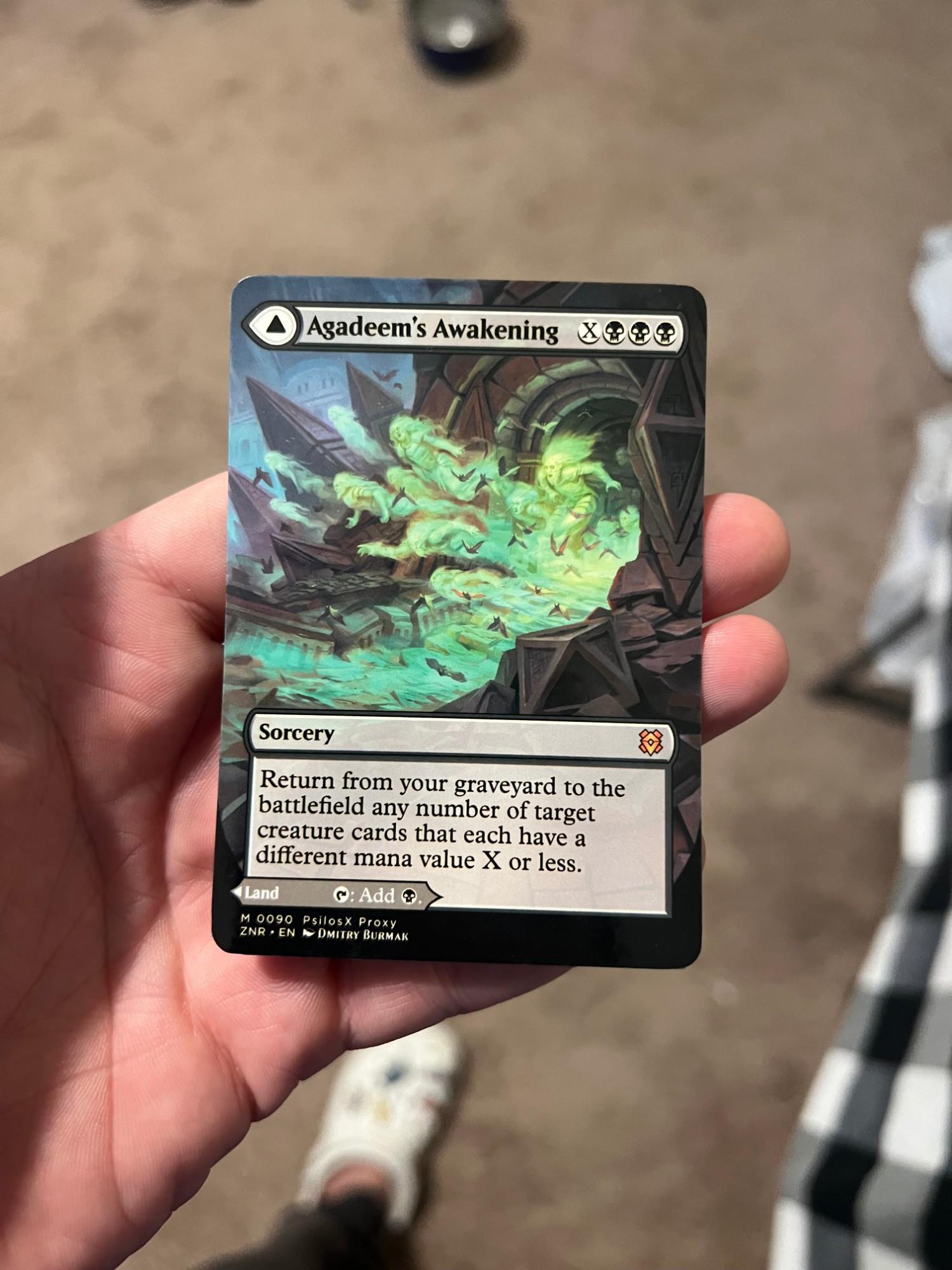
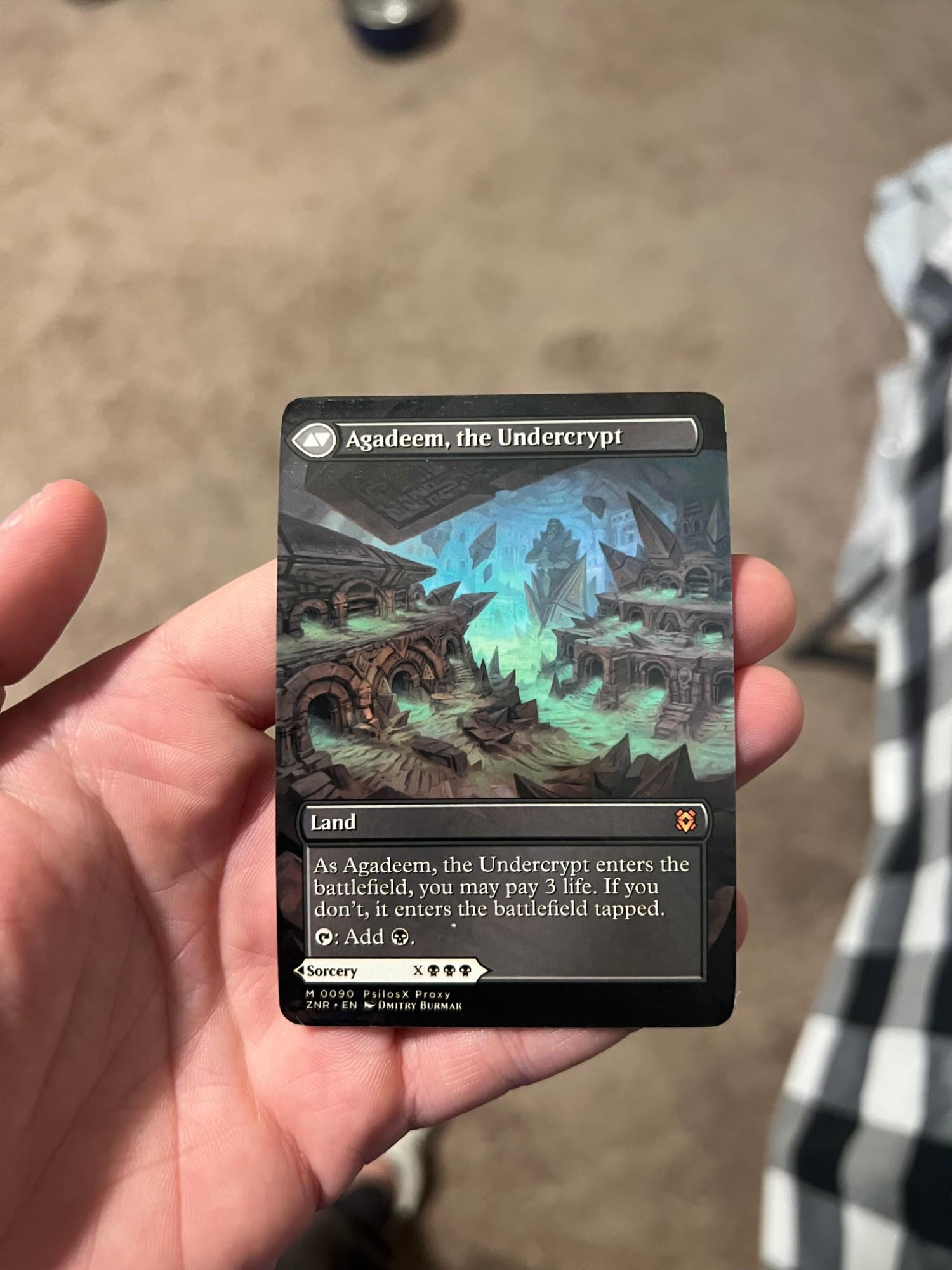
- Standard trading-card size, so it fits every sleeve and shuffles with the rest of the deck.
- Cut from a slightly thicker stock than an official card. Single-sleeved, a Proxit deck feels close to a double-sleeved real one — and out of a sleeve, nobody mistakes it for the genuine article.
- Matte by default, with glossy-front foil as an add-on. The art is whatever you chose in MPCFill or Proxxied.
- A back that is never the official one.
Reselling, trading, and "passing off"
Don't sell or trade a proxy as a real card. It's in our terms because it's the thing that hurts other players, and it is the thing the publisher pursues. Selling a deck of obvious playtest cards as playtest cards is a different matter and a normal part of the hobby; the problem is only ever deception.
A note on "legal advice"
We're a print shop in San Antonio, not a law firm, and nothing here is legal advice. This is how we understand the line and the policy we run on every single order. If you need certainty for your situation, ask a lawyer who handles intellectual property.
Proxy etiquette, briefly
- Ask your pod before you bring them; follow whatever limit they set.
- Make them easy to spot — that's what the non-official back is for.
- Don't proxy to win a stakes game. Proxy to play the deck you want to play.
- If you end up loving the deck, buy the real cards. The proxies will still work as playtest copies for the next brew.